


How MGM Mechanical helped a local church move away from oil heat, replace aging AC equipment, and improve year-round comfort with Mitsubishi Hyper-Heating ducted heat pumps.
When a church or older commercial building in Central Pennsylvania depends on aging HVAC equipment, replacement is not always as simple as swapping one unit for another. The building may have different comfort needs across large gathering spaces, offices, classrooms, fellowship areas, or other shared rooms. The system also needs to be serviceable, efficient, and reliable for a property that may sit lightly used during the week and then fill with people for services, events, and seasonal activities.
That was the situation at Free Spring Church of the Brethren in Mifflintown, PA. MGM Mechanical had maintained the church’s two oil-fired boilers and eight AC systems with hot water coils for years. The existing air conditioning equipment was at least 20 years old and ready for replacement, and the church wanted to move away from oil heat while gaining better control over the building’s comfort.
For this project, MGM Mechanical designed and installed Mitsubishi Hyper-Heating ducted heat pump systems with WiFi controls. The new approach gave the church heating and cooling in one system, helped reduce reliance on oil, added remote temperature control, and created a more flexible comfort solution for a large church building in Juniata County.
The Challenge: Aging Oil Boilers, Older AC Units, and Better Control
Free Spring Church-Brethren had a large existing HVAC setup with two oil-fired boilers and eight air conditioning systems with hot water coils. The AC units were more than two decades old, which made replacement a practical next step for comfort, reliability, and long-term maintenance planning.
The heating side of the building also presented an opportunity. The existing oil boilers were operating at roughly 80 percent efficiency. In practical terms, that meant a meaningful portion of the heat being paid for was leaving through the chimney instead of being used inside the building.
The system totaled approximately 350,000 BTUs of heating capacity. At 80 percent efficiency, roughly 70,000 BTUs were being lost each time the boilers fired. For a church with large spaces to heat during Pennsylvania winters, that kind of loss adds up over time.
The church also wanted WiFi controls so temperatures could be managed remotely. That matters for buildings with changing schedules, because staff or facility leaders may need to adjust settings before services, meetings, events, or weather changes without having to be physically present at the property.
The Solution: Mitsubishi Hyper-Heating Ducted Heat Pump Systems
MGM Mechanical recommended Mitsubishi Hyper-Heating ducted heat pump systems as the right fit for this project. The goal was to give the church efficient heating and cooling without continuing to rely on the older oil-fired boiler setup as the primary comfort solution.
Heat pump technology is different from combustion-based heating because it moves heat instead of creating heat by burning fuel. For a church that wanted to move away from oil, a ducted heat pump design gave the building a path toward all-electric heating and cooling while keeping comfort distribution through ducted equipment.
This also allowed the project to address heating and cooling together. Instead of replacing only the old AC equipment and leaving the heating system largely unchanged, the church could modernize both sides of the comfort system at the same time.
Because these were ducted systems, the solution was appropriate for a larger commercial-style building where capacity, airflow, zoning, controls, and service access all needed to be considered during design.
Replacing Four 8-Ton Air Handlers With Eight Twinned 4-Ton Units
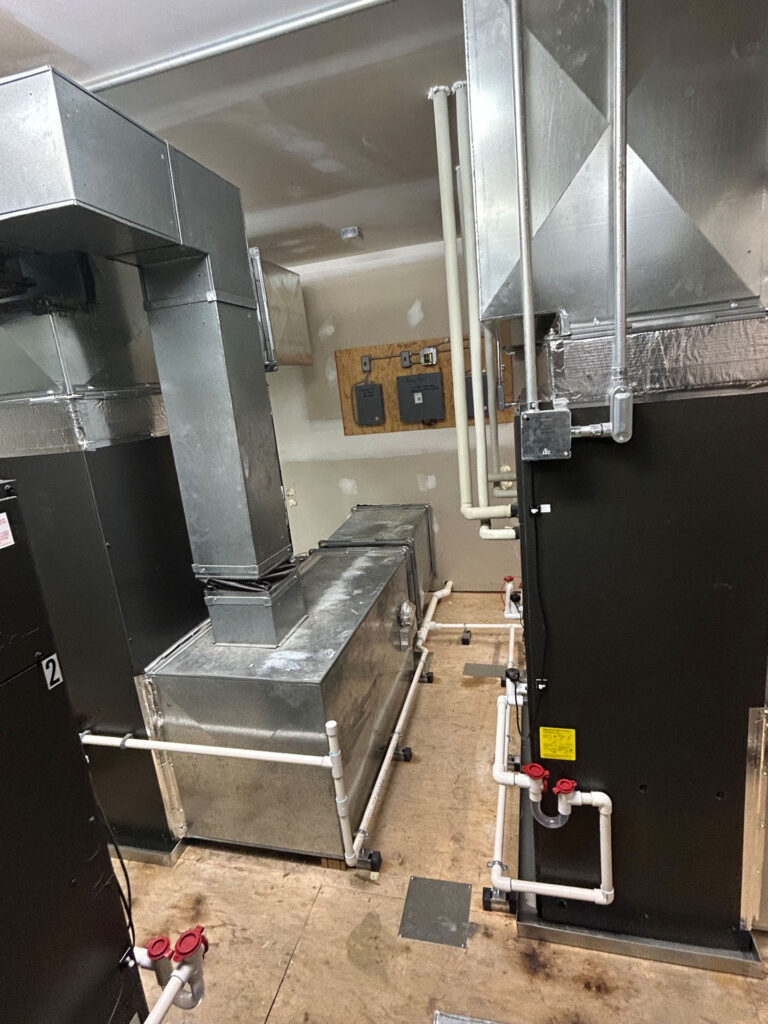
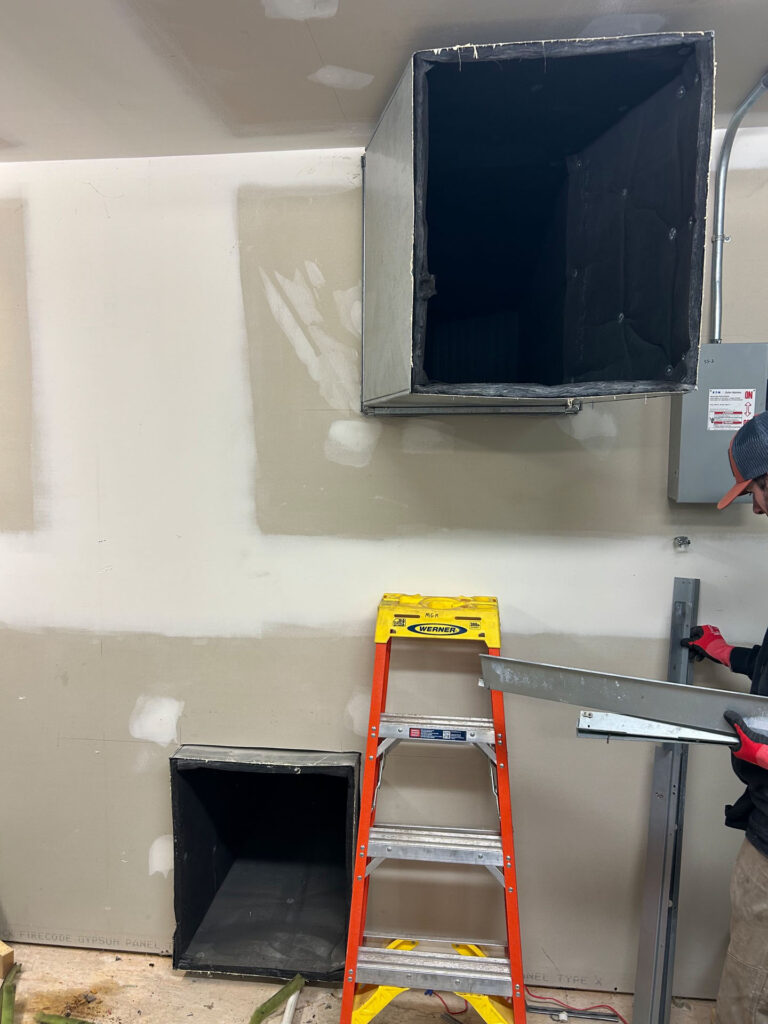
The church previously had four 8-ton air handlers, for a total of 32 tons of heating and cooling. Rather than replacing those sections with the same single large-unit approach, MGM Mechanical used a twinned design.
Two separate 4-ton units were paired together to create 8 tons of heating or cooling for each section. Across the building, that meant eight 4-ton air handlers working in pairs to provide the same total 32-ton capacity.
This design added an important reliability advantage. If one unit in a paired section ever has a mechanical issue, the church can still have 4 tons of heating or cooling available in that section. Under the old single 8-ton approach, a failure could have meant zero heating or cooling for that part of the building until repairs were completed.
For a church, that kind of redundancy matters. Services, funerals, weddings, community events, and seasonal programs are not easy to move because one section of the building is uncomfortable. The twinned-unit design gave the property a stronger backup position than the old arrangement.
Variable-Speed Performance for Better Comfort and Lower Energy Use
Another major improvement was the move from single-speed equipment to variable-speed systems. The existing AC units were essentially either on or off. When they ran, they used the full capacity available for that section.
Variable-speed systems can ramp up and down to better match the heating or cooling load. Instead of running at full output every time the system starts, the equipment can adjust based on what the building needs at that moment.
That helps reduce unnecessary electric usage and creates a smoother comfort experience. It can also improve humidity control during the summer, because longer, steadier run times often allow the system to remove moisture more consistently than short bursts of full-capacity cooling.
During the winter, variable-speed operation can also help the building feel more even and comfortable. For large church spaces, this can make a noticeable difference because comfort is affected by ceiling height, occupancy, sun exposure, door traffic, and how frequently each part of the building is used.
WiFi Controls for a Building With Changing Schedules
Free Spring Church-Brethren also requested WiFi controls, which were included as part of the new system design. Remote temperature control is especially useful for churches and similar institutional buildings because the schedule can change throughout the week.
A Sunday morning service may require one comfort setting. A weekday meeting, evening program, or special event may require another. WiFi controls give the building’s leaders a more practical way to prepare the space before people arrive and make adjustments when plans or weather conditions change.
For many commercial and church HVAC projects, controls are just as important as the equipment itself. Good controls help the system support the real way the building is used, not just the way it looks on a mechanical plan.
A Custom Outdoor Stand for Eight Heat Pump Units
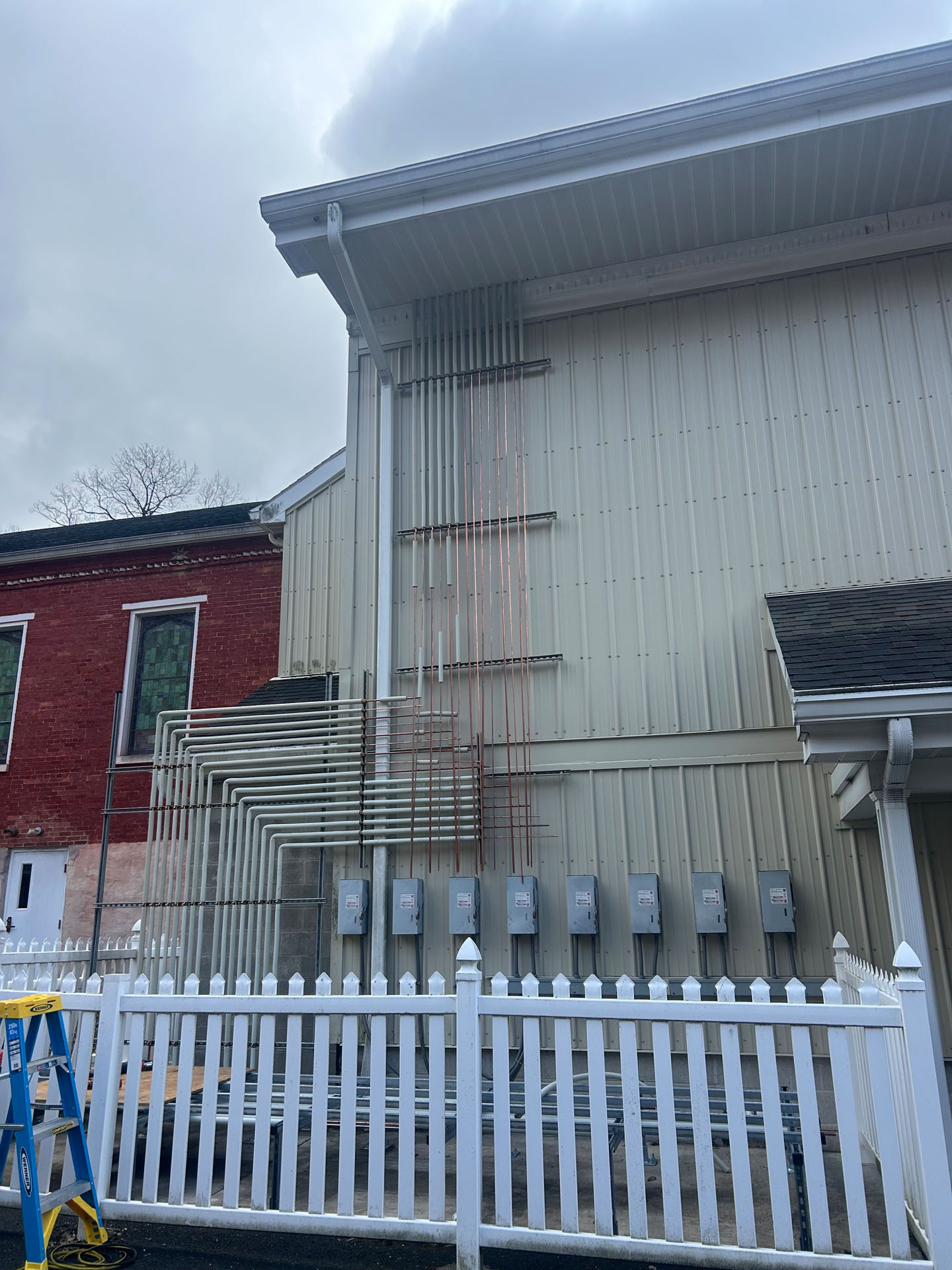
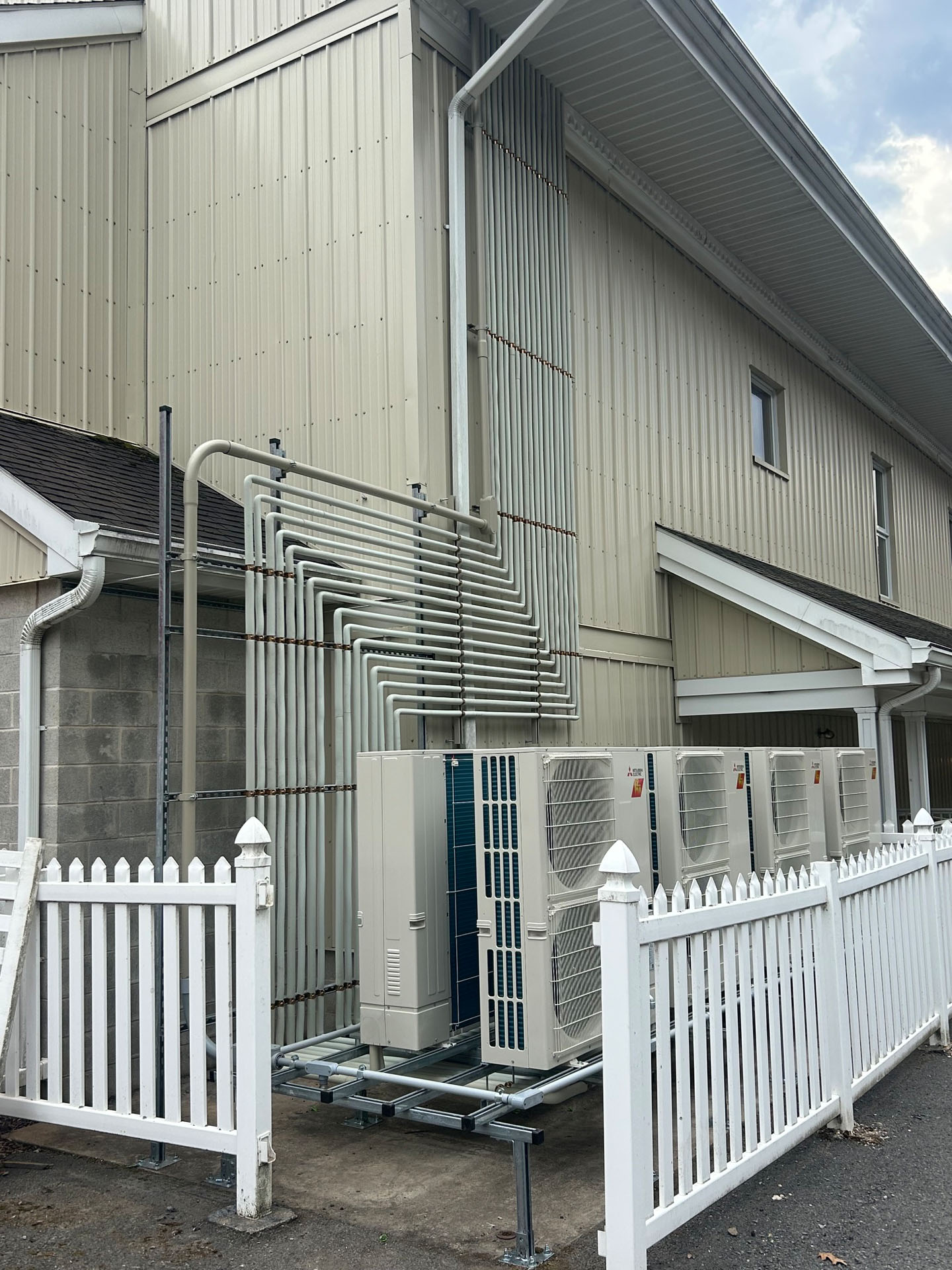
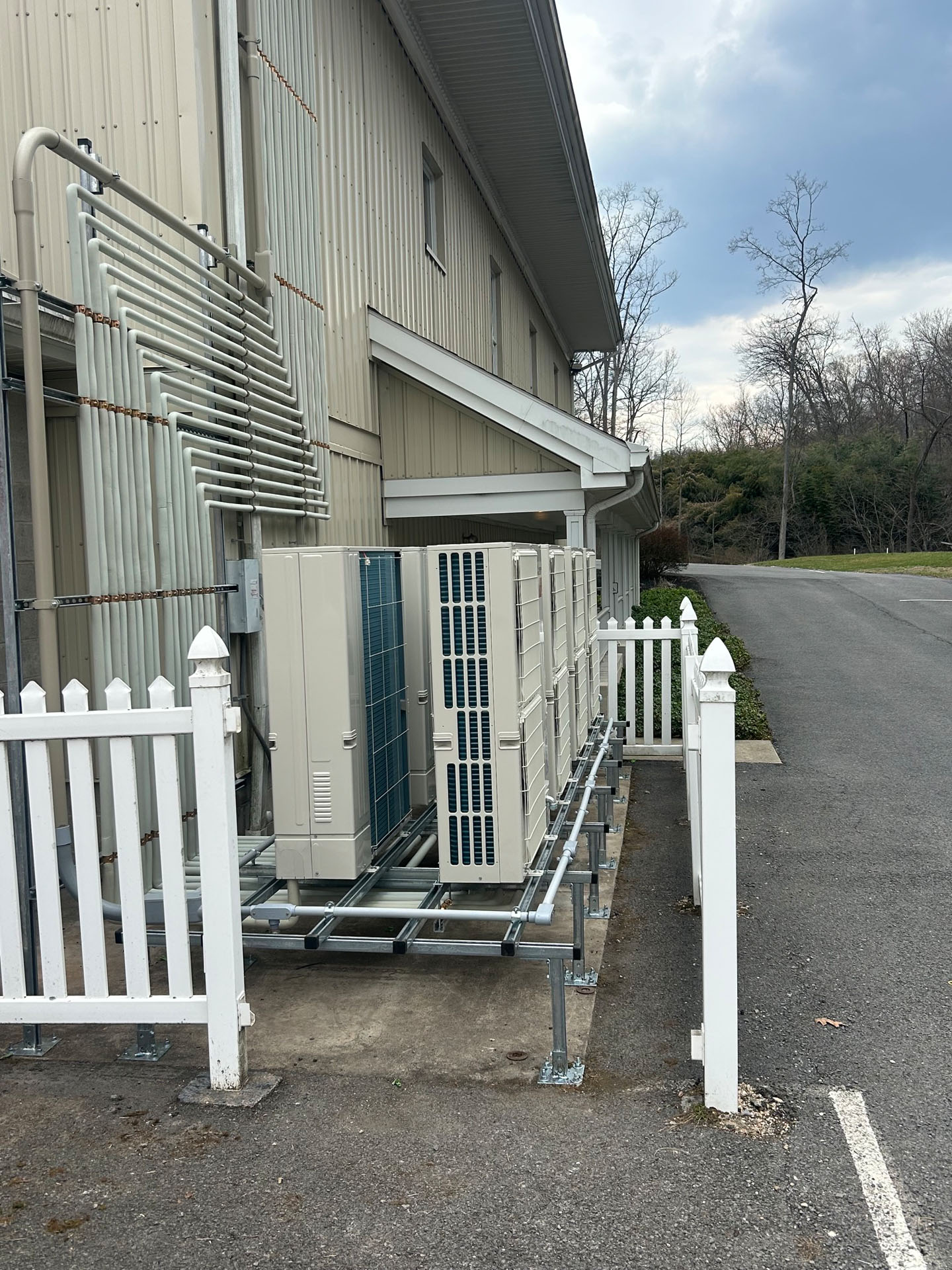
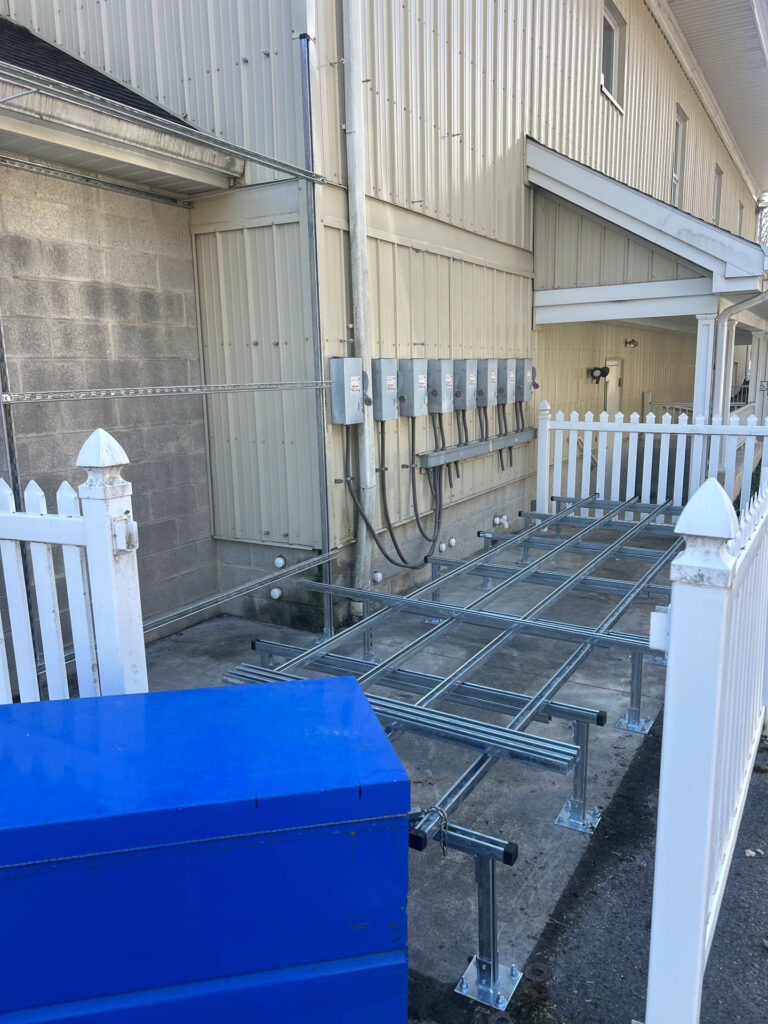
Because the project included eight outdoor units, the installation also required careful outdoor planning. MGM Mechanical’s commercial installation crew created a custom stand that held all eight outdoor units side by side and back to back.
That custom stand helped organize the outdoor equipment in a clean, serviceable layout while keeping the units elevated. In Central Pennsylvania, outdoor heat pump equipment needs to be planned with snow, drainage, airflow, and service access in mind.
The Mitsubishi systems were installed at least 12 inches off the ground to account for snow. That detail matters in Mifflintown and throughout Juniata County, where winter weather can affect outdoor equipment placement if the project is not planned correctly from the beginning.
Why This Project Matters for Churches in Mifflintown, Juniata County, and Central PA
Many churches and older commercial buildings throughout Mifflintown, Juniata County, and Central Pennsylvania still rely on older heating and cooling equipment. Some have oil boilers, aging AC systems, limited controls, or equipment that no longer matches the way the building is used today.
This project shows how a church HVAC replacement can be more than a basic equipment swap. The right design can address comfort, efficiency, redundancy, serviceability, and control at the same time.
For this Mifflintown church, MGM Mechanical was able to help the client move away from oil heat, replace 20-year-old AC equipment, maintain the 32 tons of heating and cooling capacity the building needed, and add a twinned-unit layout that gave the church more peace of mind for future reliability.
It is also a strong example of why commercial HVAC work should be evaluated around the building, not just the equipment. Churches often have large gathering areas, varied occupancy, older mechanical layouts, and unique comfort expectations. A system that works well in a small office or single-family home may not be the right answer for a church building.
Need Commercial HVAC Replacement for a Church or Building in Central PA?
If your church, business, or commercial property is dealing with aging AC units, oil heat, uneven comfort, outdated controls, or rising maintenance concerns, MGM Mechanical can help evaluate the building and recommend a system that fits the space.
The team provides commercial heating, commercial cooling, heat pump installation, maintenance, and HVAC replacement services throughout Mifflintown, Juniata County, and the surrounding Central Pennsylvania region.
If you are planning a commercial HVAC replacement or want to explore a modern heat pump solution for a church, office, retail property, or community building, contact MGM Mechanical to schedule an estimate.
Frequently Asked Questions
Can A Church Replace Oil Heat With Heat Pumps?
Yes. Many churches and commercial buildings can use properly designed heat pump systems for heating and cooling. The right fit depends on building size, existing ductwork, electrical capacity, outdoor unit placement, controls, and comfort goals.
Why Would A Church Choose Ducted Heat Pumps Instead Of Oil Boilers?
Ducted heat pumps can provide both heating and cooling, reduce reliance on delivered fuel, and support more flexible temperature control. For this Mifflintown church, the system helped address aging AC equipment and oil heat at the same time.
What does it mean to twin HVAC units?
Twinning means pairing two smaller units together to serve one larger section. In this project, two 4-ton units were paired to provide 8 tons of heating or cooling. If one unit ever has a mechanical issue, the section can still receive partial heating or cooling from the other unit.
Why were the outdoor units installed on a custom stand?
The project included eight outdoor units, so MGM Mechanical created a custom stand to keep the equipment organized, elevated, serviceable, and better prepared for Central PA winter conditions.